










Small gardens need 6–10 lights, medium gardens 10–18, and large gardens 18–30+. The actual number depends on how you use the space after dark, not on arbitrary formulas or garden size alone.
DIY lighting installations usually fail for one simple reason. They focus on quantity over purpose. Too many lights create glare, waste energy, and flatten your garden’s character. Too few leave paths unsafe and features invisible. The right number comes from understanding garden zones and how you actually use the space after dark, not guesswork or copying what neighbours have done.
Key Takeaways
- Professional garden lighting uses layered zones (paths, seating, features, security) rather than evenly spaced fixtures, which naturally reduces the total number of lights needed whilst improving functionality and atmosphere.
- Path lighting typically needs fixtures spaced 2–3 metres apart with low-level or downward-facing designs, whilst feature lighting uses 1–4 uplights per focal point, depending on size and effect required.
- UK regulations, including light pollution guidance and statutory nuisance laws under the Environmental Protection Act 1990, require careful fixture placement and output control to avoid complaints and ensure compliance.

How Your Garden Is Used After Dark
Different garden zones need different lighting approaches. This foundational concept determines how many lights you actually need.
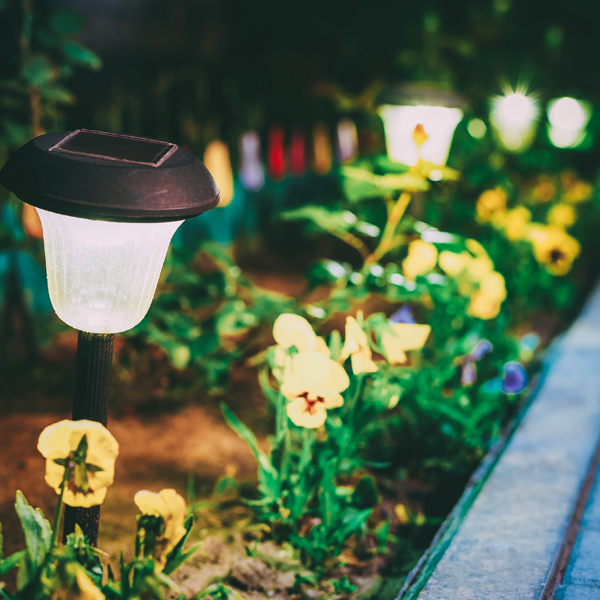
- Paths and steps require guidance and safety lighting. Low-level fixtures prevent trips and falls without creating glare or light spill beyond the immediate area.
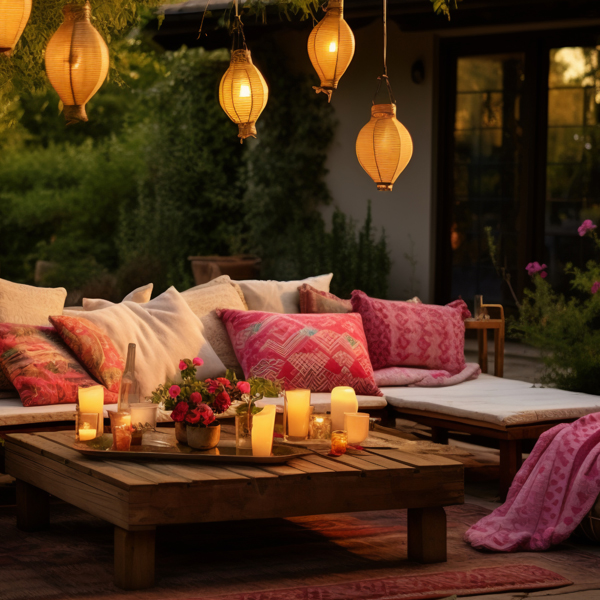
- Seating and dining areas need softer, ambient light for comfort. Nobody wants to eat dinner under interrogation-level brightness, so these zones use warmer temperatures and lower output spread across several fittings.
- Features like trees, planting, walls and water create depth and interest. Accent lighting here uses focused beams to highlight specific elements rather than flooding entire areas.
- Boundaries and entrances benefit from subtle security lighting. Motion-activated fixtures at key access points provide reassurance without leaving lights burning all night or disturbing neighbours.
Professional garden lighting uses layers of light, not evenly spaced fixtures. This is the approach we take as garden lighting specialists, lighting specific zones purposefully, so you need fewer fittings whilst achieving better results.
General Lighting Guide by Garden Size
Garden size gives you a rough starting point, but it’s never the whole story. What works in one 15-metre garden might fall flat in another of exactly the same dimensions.
Small Gardens and Courtyards
Compact spaces typically need somewhere between 6 and 10 lights total. Any more than that and you’re fighting for space, creating glare where you wanted atmosphere.
The focus here is straightforward. Path safety so nobody trips over steps in the dark. One seating area lit well enough to enjoy without feeling like you’re under interrogation. Maybe one or two features highlighted, a nice tree or architectural planting that deserves attention.
Less genuinely works better in tight spaces. Six thoughtfully placed lights will outperform twelve random ones every single time.
Medium-Sized Gardens
Medium gardens open up more possibilities. You’re looking at roughly 10 to 18 lights, depending on layout and how many different zones you’re creating.
Here, you can combine path lighting with proper feature lighting and still have capacity for ambient zones around seating or dining areas. There’s flexibility for layering, which means you can create depth and interest without flooding everything with brightness.
The key is restraint. Just because you can add more lights doesn’t mean you should.
Large Gardens
Large spaces usually need 18 to 30 lights, sometimes more if the property is extensive. Zoning becomes critical at this scale because poor planning creates problems you can’t fix without starting over.
Without careful design, distant areas disappear into black voids whilst foreground zones get over-lit, which kills the atmosphere and wastes energy. Professional lighting design helps balance coverage against aesthetics so the garden feels cohesive rather than patchy.

These numbers are starting points based on typical UK installations, nothing more.
Path and Step Lighting Requirements
Path lighting is where many DIY installations go wrong. The instinct is to light every metre, but this creates glare, wastes money, and often reduces actual visibility.
Typical spacing runs 2–3 metres apart, not every metre. Low-level or downward-facing fittings reduce glare and light pollution whilst providing the visibility needed for safe movement.
Lighting one side of a path is often sufficient. Both sides can work in formal designs, but single-side placement with 2.5-metre spacing usually delivers better results than double-side installation at tighter intervals.
Steps and level changes need clear definition but should remain subtle. A small downlight or bollard at each level change prevents trips without turning the area into a runway. The goal is safe visibility, not brightness.
Fewer, well-placed lights perform better than many bright ones. Three 3-watt LEDs spaced appropriately will outperform six 1-watt fixtures clustered too close, both in terms of visual comfort and actual safety.
When choosing weather-resistant fittings with appropriate IP ratings, path lights need IP65 minimum for exposed locations where rain and moisture are constant factors.
Feature Lighting Changes the Numbers
Accent lighting dramatically impacts total fixture count. Selective lighting creates more effect with fewer fittings than comprehensive coverage ever could. Here’s what different garden features typically require:
| Feature Type | Typical Light Count | Placement Approach |
|---|---|---|
| Mature trees | 2–4 uplights | Use multiple angles |
| Small ornamental trees | 1 uplight | One well-aimed light |
| Long walls / fences | 1 light per 3–5m | Even spacing for rhythm |
| Planting beds | 1–2 focal lights | Light key plants only |
| Water features (small) | 1 fixture | In or beside feature |
| Water features (large) | 2–3 fixtures | Space for movement |
Focusing on key features helps the garden feel well-lit with fewer total fixtures. Strategic placement means you need fewer lights overall, whilst creating more visual impact and preserving the mystery that makes nighttime gardens interesting.
Why Over-Lighting Causes Problems
Installing too many lights creates multiple problems that go beyond wasted money. Here’s what happens when gardens get over-lit:
| Problem | Impact | Consequence |
|---|---|---|
| Light pollution | Affects wildlife & neighbours | Wastes energy, harms night sky |
| Statutory nuisance | Triggers complaints | Enforcement or removal |
| Glare and discomfort | Causes visual strain | Feels harsh, not relaxing |
| Wasted cost | Raises install & running costs | Higher bills, complex systems |
| Flat appearance | Removes depth | Lifeless, characterless space |
That’s why professional installations use the minimum number of lights needed to achieve the desired effect. Fewer lights, placed properly, do a better job than dozens scattered everywhere.
This approach protects wildlife, keeps the neighbours happy, and actually makes your garden look how you want it to (somewhere you’d choose to spend an evening rather than somewhere you’d rush back through to get indoors).

UK government guidance on light pollution makes clear that avoiding excessive brightness matters, particularly in larger gardens where the cumulative effect can impact neighbours and local wildlife.
If your installation causes problems through brightness, duration or where light spills, local councils can step in under artificial light nuisance regulations and require changes.
Low Voltage Systems and Design Flexibility
Low-voltage systems give you far more freedom in garden and exterior lighting because they take a lot of the risk and rigidity out of the design. You’re not fighting against heavy cabling or awkward safety zones. You can focus on how the space should feel, not just where the wires must go. That alone changes how you approach the whole layout.
And that matters more than people often realise.
Because you’re working at lower voltage, lights can be tucked into planting, set into steps, or hidden along edges without it becoming a major technical headache. As the garden grows or changes, the lighting can change with it. You’re not locked into decisions made years earlier.
It’s also easier to adjust when tastes change or priorities shift. You refine, rather than rebuild.
Low voltage also supports a softer style of lighting. Instead of flooding everything with brightness, you can build layers and gentle contrast. The garden still feels like a garden at night, not a car park.
And that, really, is the point.
Why a Lighting Design Matters
DIY counting methods usually miss critical factors that determine whether lighting actually works. Professional designs calculate lux levels for each zone rather than guessing fixture quantities, which ensures paths meet safety requirements, seating areas remain comfortable, and features receive appropriate emphasis without over-lighting.
Beyond the obvious calculations, professional lighting design delivers several advantages that affect fixture count accuracy, because:
- UK rules, neighbour impact and environmental concerns shape what’s even possible
- beam angles, output and surface reflections change how many fittings are required
- unnecessary spend is avoided by not over-lighting areas
- surveys and layout-based calculations replace guesswork
That’s what turns lighting from a rough estimate into something you can actually rely on.
Once those factors are accounted for, fixture numbers start to line up with how the space really works.
Conclusion
The right number of garden lights depends on how you use your outdoor space, not formulas or copied layouts. Professional design prevents over-lighting, cuts costs, and ensures compliance. We deliver lighting that balances safety, style and efficiency after dark.
Get in touch for a free estimate today. We’ll assess your garden’s layout, discuss how you use the space after dark, and recommend the optimal number and placement of lights for your needs.
FAQs
Can I light my garden with just 5 or 6 lights?
Yes, if it’s a small courtyard or simple layout. Five well-chosen lights strategically placed can deliver better results than fifteen poorly positioned fixtures. Focus on essential zones (path safety, one seating area, one feature) rather than comprehensive coverage.
How far apart should garden lights be spaced?
Path lights typically work at 2–3 metre spacing. Feature uplights depend entirely on what you’re lighting (one per small tree, multiple for large specimens). There’s no universal spacing rule because beam angles, output, and purpose vary significantly between fixture types.
Do I need different lights for different areas of the garden?
Absolutely. Path lights, uplights, downlights, and ambient fittings all serve different purposes. Using path bollards to light trees or uplights along paths creates poor results. Match fixture type to zone requirements for best performance.
Will garden lights disturb my neighbours?
They can if positioned or aimed poorly. Keep fixtures angled below 80° to reduce light spill, use shields or hoods where needed, and avoid pointing lights towards neighbouring properties. Motion sensors and timers also reduce potential nuisance compared to all-night operation.
Should I install mains voltage or low-voltage garden lights?
Low voltage (12V or 24V) works better for gardens in the vast majority of installations. It’s safer, more flexible, easier to modify, and allows DIY positioning changes. Mains voltage suits only specific applications like very large properties or high-output requirements.

