
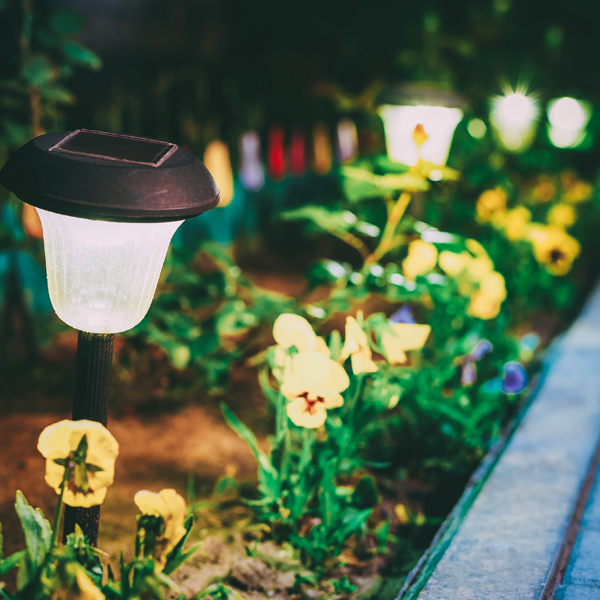
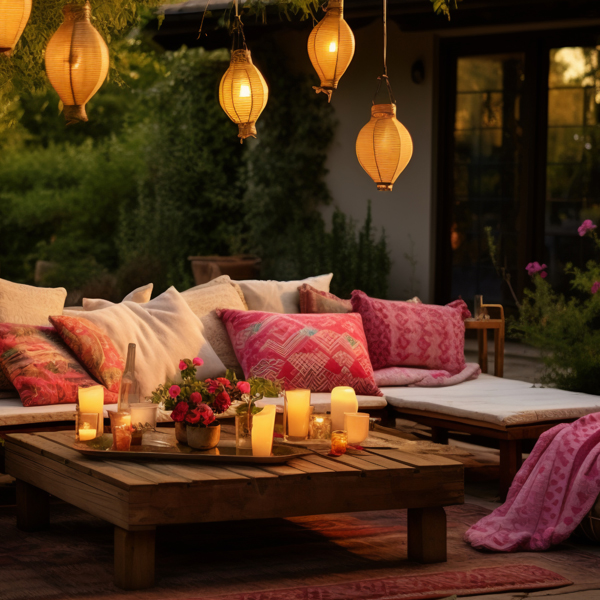





Garden lights need 50 to 300 lumens for paths, 400 to 1200 lumens for patios, and 300 to 1500 lumens for feature lighting, depending on area size and mounting height.
Not sure how bright your garden lights should be? Safety needs differ from entertaining comfort, and both affect wildlife differently. A front path to your porch needs enough light to prevent trips, while patio drinks benefit from softer ambient levels.
This guide explains key lighting terms, shows lux-to-lumen conversion, recommends brightness levels, and covers practical fixture, colour temperature, and control choices.
Key Takeaways
- Lux measures brightness on surfaces while lumens measure total light output, requiring conversion based on area covered.
- Garden paths typically need 50 to 300 lumens per fitting, while patios require 400 to 1200 lumens distributed.
- Warm colour temperatures below 2700 kelvin reduce ecological impacts on insects and minimise glare for neighbours significantly.



Lighting Levels for Garden Lights
Effective garden lighting depends on understanding how different measurements describe brightness, surface illumination, and energy use. The primary lighting measurements relevant to outdoor garden fixtures are:
- Lumens indicate the total amount of light a lamp emits into the surrounding space.
- Lux measures how much of that light actually falls on a surface, expressed as lumens per square metre.
- Watts show how much energy a light consumes, not how bright it is, making them unreliable for comparing LED brightness.
Because LED efficiency varies widely between products, selecting garden lights based on lumens and expected lux levels will give more accurate results than relying on wattage.
For example, a 400-lumen bollard light can produce around 20 lux on a 2 m × 2 m path tile when positioned and aimed correctly, providing practical guidance for pathway illumination.
This simple formula works by multiplying the desired lux by the area in square metres to give lumens, but real-world beam and height losses mean higher lumens needed.

Professional specifications use numeric limits for upward light ratio, light trespass at boundaries, and vertical illuminance that suburban zones typically restrict to 5 lux before curfew and 1 lux afterwards.
How Bright Should Garden Lights Be? (Recommended Lux and Lumen Ranges)
Outdoor spaces usually need much lower lux than indoor rooms because safety requirements differ and excessive brightness creates glare problems.
Here are practical, UK-tested ranges based on local authority lighting guidance and professional standards:
| Application | Target Lux | Lumens per Fitting | Notes |
|---|---|---|---|
| Pathways & steps | 5 to 20 lx | 50 to 300 lm | Use multiple low-output fittings close to path with narrow beams |
| Patio / entertaining area | 50 to 150 lx | 400 to 1,200 lm | Use dimmers and layered lighting for flexibility |
| Driveways / vehicle movement | 20 to 50 lx | 600 to 2,000 lm | Fewer shielded fixtures to avoid glare for drivers |
| Entrance / porch | 50 to 100 lx | 300 to 800 lm | Aimed, shielded downlight or wall light works best |
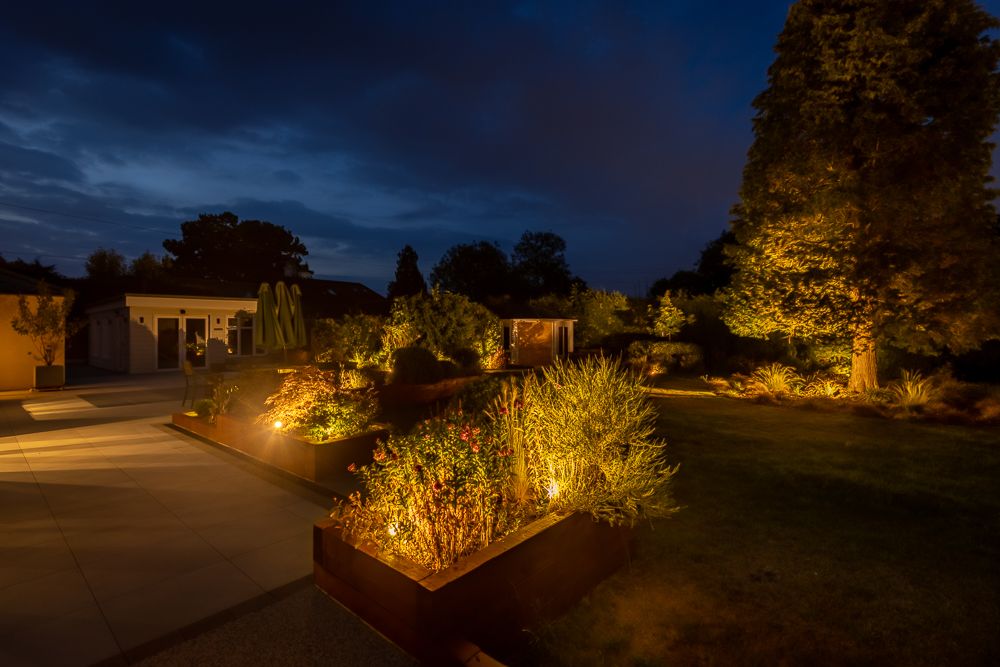
| Feature uplighting (trees, walls) | 10 to 100 lx at target | 300 to 1,500 lm | Narrow beam, shielded fixtures depending on distance |
| Security motion flood | ~100 lx or higher | 1,000 to 3,000+ lm | Motion activated, short duration, proper shielding essential |
These ranges come from South & Vale lighting design guidance and similar local authority specifications that designers and councils use across the UK. Actual requirements vary based on specific site conditions, mounting heights, and fixture beam angles.
Lux Level Chart
Path at 10 lux requires roughly 100 lumens per 1 metre strip for even coverage without glare.
Patio at 75 lux needs 300 to 600 lumens from focal and ambient fittings combined, depending on area size.
Security flood at 100 lux delivers 1,000 to 3,000 lumens, but should activate only on motion detection to avoid constant high brightness.
Practical Conversion Example
A simple calculation helps estimate how much light output is needed to illuminate a specific outdoor surface
To achieve 50 lux on a 4 m² patio tile you need roughly 200 lumens delivered to that surface.
- Formula:
Required lumens = Desired lux × Area (m²)
Pick a 400 to 600 lumen fitting, depending on beam angle and mounting height, because real-world losses from spread and distance mean you need higher output than the simple calculation suggests.
Narrow-beam fixtures deliver more light to the target with less spill, while wide-beam fixtures require closer spacing or higher output to maintain the same lux levels.
How to Choose Garden Light Fixtures
The right garden light fixtures depend on matching each type to its intended outdoor function.
Common fixture roles include:
- Bollards for pathways, providing downward-directed guidance lighting.
- Wall lights for entrances and vertical surfaces.
- Spotlights for feature lighting with narrow, focused beams.
- Floodlights for larger areas such as driveways when properly shielded.
Beam angle and spread determine how light distributes across the ground or feature being illuminated.
On the other side, mounting height and spacing affect how many fixtures are required to achieve the target lux without dark spots or excessive overlap. Proper shielding and cut-off optics help prevent glare and unwanted light spill that can disturb neighbours and wildlife.
On-site, we design and install complete garden lighting systems that balance safety, atmosphere, and ecological responsibility through proper fixture selection and placement.
Best Colour Temperature for Garden Lighting
- Colour temperature at or below 2700 kelvin provides warm white light that creates a comfortable atmosphere without harsh glare.
- Cooler LEDs above 3000 kelvin create harsher contrast and increase neighbour complaints about intrusive lighting. Wildlife considerations favour warm light because blue rich emissions affect nocturnal insects and birds more severely than amber or warm white alternatives.
Why Warm Light Is Better for Gardens
Ecological effects from artificial lighting increase dramatically with cooler colour temperatures and higher brightness levels.
Recent research from the University of Exeter found that moth activity dropped by roughly 85 percent at just 10 lux, showing that even modest brightness levels suppress natural behaviour in sensitive species.
Some moth species responded to light as low as 0.1 lux, which is comparable to sky glow from distant urban areas.
These findings show how even modest brightness disrupts natural behaviour, making warm colour temperatures below 2700 kelvin and minimal necessary brightness essential for reducing ecological impact.

Smart Controls for Garden Lighting
- Motion sensors work well for security lighting because they activate only when movement is detected rather than running constantly.
- Dimmers suit patios and entertaining areas where you can adjust brightness based on activity level and time of evening.
- Timers and astronomical controls improve efficiency by matching lighting schedules to actual darkness hours rather than fixed clock times.
Avoid always-on floodlights because constant high brightness wastes energy, creates light pollution, and harms wildlife throughout the night.
Professional analysis of lighting energy use shows that controls reduce consumption substantially even when efficient LED lamps are already installed. It recommends combining dimming, occupancy sensing, and daylight consideration in outdoor lighting projects to align with net-zero priorities.
UK Planning Rules and Best Practice for Outdoor Lighting
Nuisance lighting risks arise when poorly aimed or excessively bright fixtures spill into neighbouring properties or public areas. Check local planning requirements where installations are near neighbours or in protected landscapes, because some areas require formal assessment before installation begins.
Aim lights downward and minimise spill using shielded fixtures with full cut off optics that prevent upward light escape. Planning authorities assess artificial lighting impacts on local amenity, dark skies, and ecological networks when development proposals include external lighting.
Technical assessments usually measure vertical illuminance at neighbouring windows and check compliance with upward light ratio limits. They also evaluate luminous intensity thresholds, which vary by environmental zone, ranging from dark rural areas to brightly lit city centres.
Conclusion
Target modest shielded lighting since safety and ambience don’t require excessive lumens or constant brightness. Careful fixture selection, warm colour temperature, and smart controls outperform higher output. Get a free estimate and we will create a lighting plan tailored to your garden and requirements.
FAQs
How many lumens do I need for a garden path?
Garden paths typically need 50 to 300 lumens per fitting to achieve 5 to 20 lux target levels. Use multiple low-output fittings with narrow beams spaced along the path rather than single bright fixtures.
Is a higher lumen number always better for security?
No, because excessive brightness creates glare that actually reduces visibility and annoys neighbours. Use motion-activated shielded fixtures with 1,000 to 3,000 lumens for short bursts rather than constant floodlighting.
Can I use watts to choose garden lights?
Watts measure energy consumption rather than brightness, and LED efficiency varies dramatically between products. A 400 lumen LED might use 4 to 8 watts depending on quality, making lumens the only reliable measure.
What colour temperature should outdoor lights be?
Colour temperature at or below 2700 kelvin works best because warm white light reduces ecological impacts on insects and creates comfortable atmosphere without harsh glare.
Do I need planning permission for bright garden lights?
Usually not for simple domestic installations, but check local council requirements if near protected landscapes or if a planning condition applies to your property from previous approvals.

