





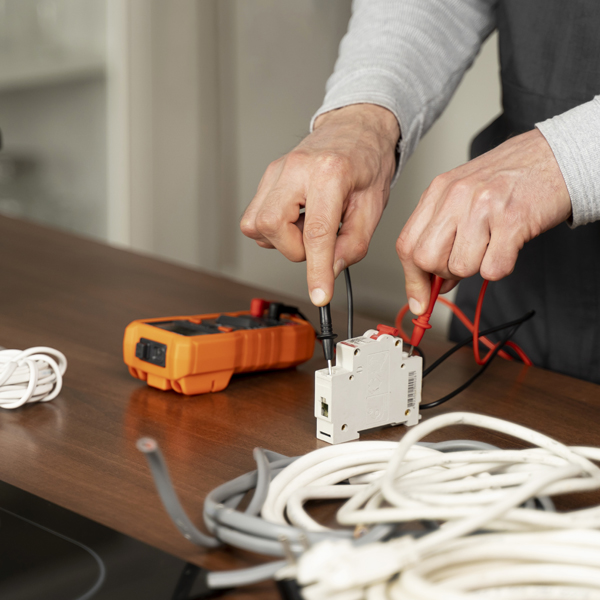
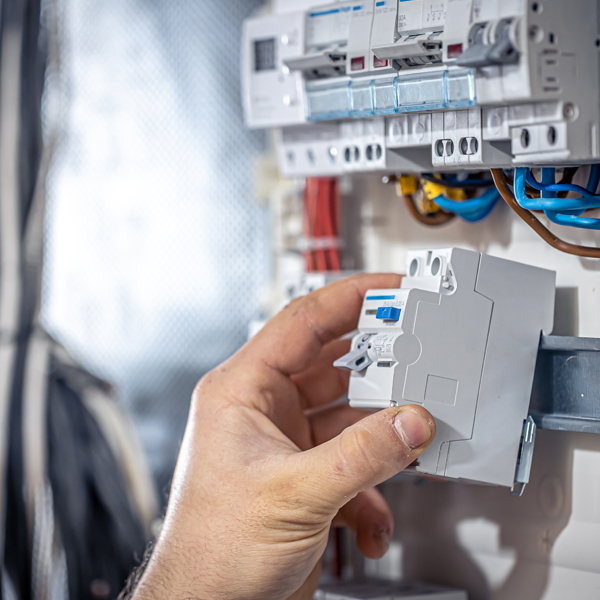















Rewiring replaces old cables, consumer units, sockets and earthing to meet modern safety standards and handle current electrical loads safely and legally.
Lights flickering, breakers tripping frequently, or inheriting an older property with questionable wiring all signal potential electrical problems. This guide explains when UK homes need rewiring, how long it takes, realistic costs, and the legal paperwork you must receive. Rewiring must comply with Building Regulations Part P and BS 7671 standards, with proper certification proving the work meets safety requirements.
Key Takeaways
- Frequent breaker trips, warm sockets, outdated wiring colours, or poor EICR results typically indicate rewiring is necessary.
- Expect five to fourteen working days for a full rewire, with power interruptions, dust, and temporary room inaccessibility.
- Registered electricians must provide an Electrical Installation Certificate and Building Regulations compliance documentation after completing rewiring work.
What Does Rewiring a House Mean
Rewiring a house involves replacing all fixed electrical wiring, the consumer unit, socket outlets, switches, and earthing and bonding systems to bring installations up to current safety and capacity standards.
Recognising when your home needs rewiring prevents fires, protects appliances, and ensures compliance with legal requirements. Several warning signs appear before complete system failure, giving homeowners opportunities to address problems before dangerous situations develop.
Signs You May Need Rewiring a House
Common indicators include:
- Frequent RCD (Residual Current Device) or MCB (Miniature Circuit Breaker) trips that happen without an obvious cause or after resetting protective devices multiple times
- Flickering lights, warm sockets, scorch marks, or burning smells suggesting overheating connections or degraded insulation
- Very old wiring types, including cloth-insulated cables, rubber-insulated conductors, or outdated wiring colours (red and black instead of brown and blue)
- Insufficient sockets and heavy extension lead use indicating the installation cannot support modern electrical loads safely
- Poor EICR (Electrical Installation Condition Report) results showing C1 (danger present) or C2 (potentially dangerous) classifications requiring urgent remedial work
Electrical Installation Condition Reports classify faults by severity and urgency. C1 classifications indicate immediate danger requiring disconnection, C2 codes flag potentially dangerous conditions needing prompt remediation, and C3 recommendations suggest improvements for enhanced safety
Professional inspection identifies hidden deterioration invisible during casual observation, documenting defects using standardised test procedures and providing written recommendations prioritised by risk level.
How Rewiring a House Works (Step by Step)
The rewiring process follows a structured sequence from initial survey through final certification. This is how it typically works from start to finish:

Assessing Your Current Electrical System
Qualified electricians inspect consumer units, circuits, earthing, and past DIY work, identifying hazards and designing compliant systems. Notifiable work requires Building Control approval or self-certification via registered schemes like NICEIC (National Inspection Council) or NAPIT (National Association).
Certain types of electrical installation work in dwellings must be notified to Building Control before commencement, though registered competent persons can self certify without separate notification.
Work categories requiring notification include new circuits, consumer unit replacements, and additions or alterations to installations in special locations like bathrooms. Registered electricians handle notification and compliance documentation directly, simplifying the legal process for homeowners.
First Fix (Strip Out and Cable Routes)
First Fix (Strip Out and Cable Routes) Electricians remove unsafe cables where accessible, route new cables behind walls and ceilings, and install mounting boxes for sockets and switches. This stage creates dust and disruption.
Final Electrical Installations and Connections
Final Electrical Installations and Connections Electricians install the new consumer unit with RCD or RCBO protection, replace old fuseboards, fit sockets, switches and lighting, then terminate all circuits, with RCBOs preventing faults affecting other circuits across the home.
Verifying the System and Issuing Certificates
Comprehensive testing verifies installation safety and performance, including continuity, insulation resistance, polarity, earth fault loop impedance, and RCD operation. Results are recorded on schedules within the Electrical Installation Certificate confirming compliance.
Certificate formats specify mandatory information fields. These include supply characteristics, earthing arrangements, main protective conductors, RCD details, and test schedules with measured values.
Homeowners receive full certification for compliance, insurance, property sales, and future reference.
Safety Standards You Must Follow When Rewiring
Electrical safety standards protect occupants, ensure legal compliance, and help maintain property value. In the UK, domestic electrical work must meet strict requirements that confirm installations are safe, properly tested, and fully certified.
Compliance ensures the system can safely handle modern electrical demand while meeting current regulations.
To stay compliant, key requirements include:
- Installations must meet current safety performance standards
- Certain types of work must be reported to the relevant authority
- Proper earthing and circuit protection must be in place
- Full testing must be completed after installation
- Certification must be provided as proof of compliance
These regulations establish minimum safety performance, specify when work needs notification, and mandate proper certification documenting compliance. Recent analysis identified 11,089 domestic electrical fires in England during 2023 and 2024, representing a significant proportion of dwelling fire causes.
Fire services across the UK respond to thousands of accidental dwelling fires each year, with electrical distribution and appliance faults among the most common ignition sources.
These risks highlight the need for prevention strategies such as safe installations, working smoke alarms, and regular electrical safety checks to reduce casualties and property damage.
What an EICR Shows About Your Wiring
Periodic inspection testing identifies deterioration, damage, overloading, and non compliant installations before they cause harm. Inspection results classify issues based on urgency and required action.
EICR findings are grouped into categories such as:
- C1 defects indicating immediate danger requiring disconnection
- C2 issues showing potential danger needing urgent repair
- C3 recommendations for improving safety standards
- Observations highlighting general wear or non-compliance
Professional inspection methods cover visual checks, insulation resistance testing, polarity verification, and earth fault loop impedance to assess system safety. These results guide decisions on repairs or full rewiring.
EICR Certificates also support insurance validity and property sales, as missing documentation can delay transactions or raise safety concerns.
Things to Consider Before Rewiring a House
Preparation reduces project duration, minimises damage, and protects belongings during disruptive electrical work.
Proper planning before contractors arrive saves time and prevents unnecessary complications. Taking a few practical steps creates better working conditions and protects your property from avoidable damage during the installation process. Homeowners can reduce disruption by organising their space efficiently, protecting valuables, and preparing work areas in advance.
This preparation includes removing furniture, placing dust sheets, and planning circuit isolation before electricians begin removing old cables and installing new wiring.
Essential preparation tasks include:
- Clearing furniture from walls and access areas so electricians can reach cable routes, mounting locations, and consumer unit positions without obstruction
- Removing fragile items, including mirrors, picture frames, wall mounted shelves, and breakables from rooms being worked on
- Protecting flooring and valuables using dust sheets, plastic coverings, or temporary relocation to unaffected areas
- Planning temporary power arrangements for essential devices like refrigerators, medical equipment, or charging stations during circuit shutdowns
- Confirming scope and schedule with your electrician before work starts, clarifying daily hours, parking, site access, and communication preferences
Good preparation accelerates installation and reduces stress. Electricians work faster when access is clear, and homeowners avoid frustration when they know what to expect each day.
What to Expect During Rewiring
Rewiring creates unavoidable disruption requiring realistic expectations and flexible living arrangements.

Homeowners either stay with limited room access or temporarily relocate for full rewires. Planning around work schedules minimises inconvenience.
Cost of Rewiring a House in the UK
Rewiring costs vary widely across the UK, influenced by property characteristics, circuit complexity, and regional contractor rates that homeowners must understand when budgeting.
Here is a breakdown of typical rewiring costs and what influences them:
| Rewiring Scope | Typical Cost Range | Key Cost Factors |
|---|---|---|
| Partial rewire (single room or several circuits) | £700–£2,500 | Number of circuits, accessibility, extent of defects |
| Full rewire (average 2–3 bed terraced or semi) | £3,000–£7,500 | Property size, number of circuits, plastering requirements |
| Larger or period properties | £7,500+ | Complex access, heritage constraints, additional circuits for modern loads |
Property size, cable route accessibility, circuit quantity, consumer unit specification, and plaster repair requirements all influence final costs. Regional variations and contractor experience levels create price differences across estimate .
Always obtain 2 to 3 detailed itemised estimate comparing materials, labour, certification, and finishing work before committing to any contractor.
What to Look for in a Rewiring Electrician
The right contractor choice determines whether your installation meets legal requirements, provides complete documentation, and delivers decades of safe reliable electrical performance throughout your home.
A clear breakdown of what to check includes:
| Essential Requirement | Why It Matters | What to Verify |
|---|---|---|
| Registered with NICEIC, NAPIT or equivalent competent person scheme | Enables self-certification under Part P without a separate Building Control notification | Ask for the registration number and check online registers |
| Public liability insurance and professional indemnity | Protects homeowners from damage claims and covers defects | Request proof of current insurance with adequate coverage limits |
| Detailed itemised written estimate | Prevents scope creep and unexpected costs | Compare materials, labour, certification, plastering, and contingency allowances |
| Confirms certification provided | Legal requirement for compliance and future property transactions | Verify EIC, circuit schedules, and Building Regulations compliance certificate inclusion |
| References and portfolio | Demonstrates experience with similar properties | Request photos of completed rewires and contact details for recent customers |
Domestic electrical work requires strict compliance and documentation. Inspections identify deterioration and faults, while testing checks safety performance. Reports classify defects by severity to guide urgent repairs.
When inspection reveals extensive deterioration or dangerous conditions across multiple circuits, comprehensive condition reporting and testing establishes the scope of required work and helps homeowners understand whether repairs or full rewiring provides the most cost-effective and safe solution.
Correct certification matters far more than the cheapest estimate. Uncertified work creates legal complications, invalidates insurance, and causes problems during property sales.
Conclusion
Rewiring delivers safety, supports modern electrical loads including EV chargers and heat pumps, satisfies insurers and solicitors, and provides peace of mind that your installation protects rather than endangers your household.
Get a free rewiring survey and Estimate from our team. We provide full certification, detailed test documentation, and transparent written estimate explaining costs and timelines before any work begins.
FAQs
Can I legally rewire my own house?
Homeowners can perform electrical work on their own properties, but must notify Building Control and arrange inspection unless using a registered competent person. DIY rewiring risks serious safety errors and requires comprehensive testing knowledge.
Does a 30 year old house need rewiring?
Not automatically, but installations from the 1990s often lack RCD protection and may have deteriorated wiring. An EICR identifies whether upgrading or full rewiring is necessary based on actual condition rather than age alone.
How long does rewiring a house take?
Typical timeframes run five to fourteen working days for complete rewires, with smaller properties finishing faster and larger or period homes taking longer due to access constraints and complex cable routing requirements.
What paperwork should I receive after a rewire?
Expect an Electrical Installation Certificate with full test results and circuit schedules, plus Building Regulations compliance certification. Keep all documentation for insurance, future electrical work, and property sales.
Will rewiring reduce fire risk?
Yes. Faulty wiring and overloaded circuits cause many domestic fires each year. Modern rewiring with RCD protection and correctly rated circuits significantly reduces fire risk.
Sources

