




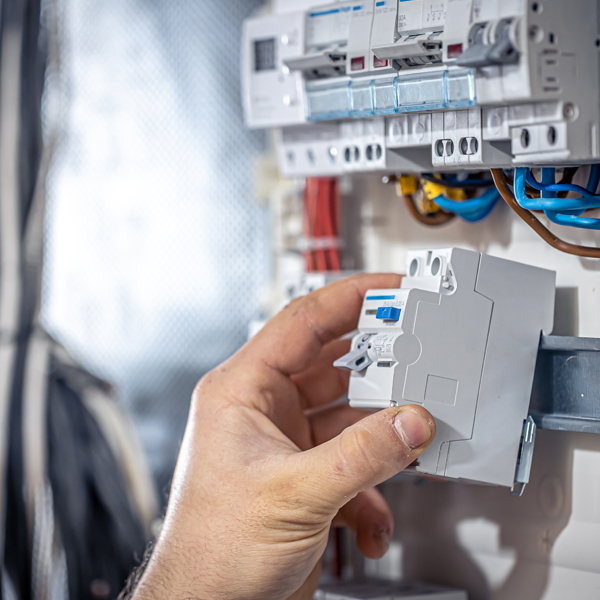












A fuse board is the old name everyone uses, a consumer unit is the modern domestic term, and a distribution board is the commercial or industrial version. They all do the same job.
People use all three terms for similar equipment, but the name usually depends on age, property type, and whether the system is domestic or commercial. The central control hub distributes electricity around a property, while fuse box is the older informal wording everyone still uses.
Key Takeaways
- Fuse board is what everyone calls it in homes, offices, and factories, even though the term is technically outdated.
- Consumer unit is the correct modern domestic term because it uses circuit breakers and RCDs instead of old-style fuses.
- Distribution board is the commercial or industrial term, usually part of larger three-phase systems with multiple boards.
Are Fuse Boards, Consumer Units, and Distribution Boards the Same Thing?
They are often used interchangeably in everyday conversation, but each term carries slightly different context. The equipment’s job is to distribute power and protect circuits, but the terminology changes by era and setting.
A consumer unit is a type of distribution board used in homes, while “fuse board” is an older everyday name that people often still use for a consumer unit.

What Is a Fuse Board?
Older boards were built around replaceable fuses, so if a circuit failed, the fuse element needed replacing. That is where the name came from.
Many readers still call any electrical board a fuse board, even when the unit is modern and contains circuit breakers. The name is technically incorrect now, but it remains the phrase everyone actually uses.
Older fuse boxes were phased out in favour of safer modern consumer units with better protection and circuit breakers. This shift happened because modern devices respond faster and provide better shock protection than traditional fuses.
Why People Still Say Fuse Board?
The old name stuck because many homes had fuse-based boards for years, and the phrase is easy to understand at a glance. Everyone knows what you mean when you say fuse board.
When we ask people for a photo of their consumer unit, they have no idea what we are talking about. We get photos of absolutely everything but the consumer unit. When we ask for the fuse board, everyone knows exactly where to look.
Do Modern Fuse Boards Still Have Fuses
Modern domestic boards normally use circuit breakers and RCD protection rather than traditional rewirable fuses. The invention of MCBs, MCCBs, RCBOs, and RCDs means there are no longer actual fuses in modern installations.
230V mains voltage creates high injury risk when equipment is damaged or faulty, and RCDs rapidly switch off the supply when detecting certain faults. That protection is why modern units replaced older fuse-based boards and why proper earth-fault protection matters in every home.
What Is a Consumer Unit
A consumer unit controls and protects the circuits in a home. It is the modern term people should use when talking about a domestic installation.
The unit acts as the central control hub, distributing electricity around the property. It splits the incoming supply into separate circuits for lighting, sockets, cookers, showers, and other fixed appliances.
Each circuit has its own protection device. When a fault occurs, the protection device trips or switches off automatically to prevent damage, fire, or electric shock.
What Is Inside a Modern Consumer Unit
Modern units contain several types of protection device working together to keep the installation safe:
Key components found in consumer units:
- MCBs for individual circuit protection against overload
- RCBOs where each circuit has combined overload and earth-fault protection
- RCDs for additional shock protection across groups of circuits
- Surge protection devices where needed for sensitive equipment
RCD protection reduces shock risk significantly. Modern replacement improves protection and ensures compliance with current standards for domestic electrical installations.
Why Consumer Unit Is the Modern Domestic Term
Consumer unit is the term professionals use for homes today, especially when modern protection devices are fitted. It refers to the unit on the consumer side of the installation.
This is what the homeowner is responsible for, and where power gets distributed from. The name reflects that the equipment belongs to the consumer rather than the supply network.
What Is a Distribution Board
Distribution board is the wider term, usually found in commercial or industrial settings. It often forms part of a larger system with multiple boards feeding different areas.
In schools, factories, and similar buildings, the incoming supply goes into a main panel board. From that main panel board, you send power out to various distribution boards in different buildings or areas.
Commercial and industrial properties need this setup because electrical demand is larger and more spread out:
Distribution Boards in Commercial Buildings
Commercial buildings often need several boards because the electrical demand is larger and more spread out across the site. Each distribution board serves a specific area or function.
This allows power to be managed efficiently across multiple zones. It also means faults in one area do not affect the entire building.
Single Phase and Three Phase Systems
Homes usually use single-phase systems, which is why consumer unit is the domestic term. Commercial and industrial sites often use three-phase supply and distribution boards.
Three-phase systems handle higher loads and balance power across larger installations. The equipment looks similar but operates at different voltages and configurations.
When a Fuse Board or Consumer Unit Should Be Replaced
Older boards should be replaced when they no longer meet modern expectations or show warning signs. Rewirable fuses, no RCD protection, frequent tripping, burning smells, discolouration, and loose or damaged fittings all signal replacement is needed.
Consumer units older than 25 to 30 years often require replacement because of:
- Outdated safety technology
- Lower protection against faults
- Increased limitations with modern usage
Newer units are designed to provide stronger protection and improved performance.
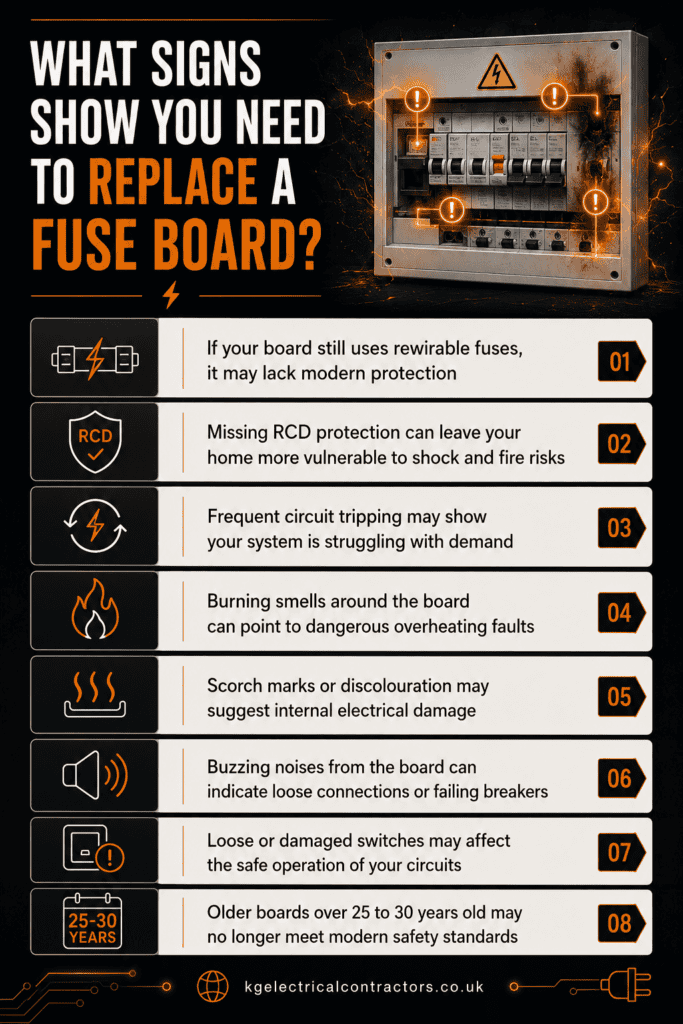
If your board shows any of these signs, our fuse board and consumer unit replacement service covers inspections, RCD protection upgrades, labelling, and full replacement to current wiring regulations.
Why Older Boards Are Often Replaced During a Rewire or EICR
Inspections and landlord duties often highlight consumer unit issues that need addressing. Current guidance explains when notification is required and covers design, installation, inspection, testing, and information provision for electrical work in dwellings. Consumer unit replacement is notifiable work in England under these regulations.
Electrics in rented homes must be checked at least every five years by a properly qualified person, and landlords must give tenants proof of inspection and testing. That rule now extends to the social rented sector as of 2025, affecting millions of additional properties across England.
EICRs frequently recommend consumer unit upgrades when older boards lack RCD protection or fail to meet current standards. Replacing the board during a rewire or inspection avoids return visits and ensures the entire installation is compliant.
Safety and Compliance You Should Know
Replacement and inspection are not DIY jobs. Mains voltage presents high injury risk when equipment is damaged or faulty, and specialist electrical work should be carried out by trained, competent people.
Modern protection devices, proper inspection, and correct notification all matter for legal compliance and safety:
Modern Protection Devices Matter
RCDs and circuit breakers respond faster than old fuses and provide better protection against shock and fire. Homes relying heavily on electricity need this protection.
Around 2.1 million households in England and Wales had electric-only heating in Census 2021, equal to around 9% of all households. These properties place higher demands on consumer units because electricity handles all heating, hot water, and cooking needs without gas backup.
Proper Inspection Matters Too
Only electrically skilled persons competent in inspection and testing should carry out periodic checks. Certified businesses can self-certify certain building work as compliant with Building Regulations.
Inspections identify faults before they cause fires, shocks, or equipment damage. Regular checks prevent small issues escalating into expensive failures.
Notifiable Work Needs the Right Process
Consumer unit replacement is notifiable work in England. That means the work must be reported to building control unless carried out by a registered electrician who can self-certify.
Proper certification protects homeowners, landlords, and future buyers. It confirms the work meets legal standards and has been inspected correctly.
Landlords and Homeowners Should Keep Records
Keeping inspection certificates, installation certificates, and test results ensures compliance and provides proof of safety. Landlords must give tenants proof of inspection and testing.
Records also help electricians diagnose faults and plan upgrades during future work.
Conclusion
The terms overlap, but consumer unit is the modern domestic term, fuse board is the older common phrase, and distribution board is usually for larger commercial or industrial setups.
If your fuse board is old, outdated, or causing concern, get in touch today and request a free estimate for a consumer unit upgrade.
FAQs
Is a fuse board the same as a consumer unit?
Yes, they are the same thing. Fuse board is the old informal name, while consumer unit is the modern domestic term.
What is the difference between a consumer unit and a distribution board?
Consumer unit is the domestic term for homes, while distribution board is used in commercial or industrial settings with larger systems.
Why do people still call it a fuse board?
The name stuck because older boards used replaceable fuses, and everyone understands what fuse board means even when the unit is modern.
Do modern fuse boards still use fuses?
No. Modern consumer units use circuit breakers, RCDs, and RCBOs instead of traditional rewirable fuses.
Can an old fuse board fail an EICR?
Yes. Boards lacking RCD protection, showing damage, or failing to meet current standards often fail EICRs and require upgrading.
Sources
1. https://niceic.com/
2. https://www.hse.gov.uk/
3. https://assets.publishing.service.gov.uk/
4. https://www.ons.gov.uk/

