








Proper garden lighting placement prioritises safety and atmosphere: position fixtures below eye level, space path lights 2-4 meters apart based on coverage needs, and prevent light spillage into neighbouring properties for best results.
Garden lighting placement shapes safety, usability, atmosphere, and environmental impact far more than brightness alone. Poor positioning creates glare, deep shadows, runway effects on paths, and light trespass into neighbouring properties. You should learn where to place garden lights by area, how spacing works, and how to avoid common mistakes that waste money and cause problems later.
Key Takeaways
- Strategic placement prevents glare, eliminates dark shadows, and avoids light trespass complaints that poor positioning creates, regardless of fixture quality.
- Combine ambient, task, and accent lighting layers for functional depth rather than relying on single-purpose fixtures throughout your garden.
- Space fixtures based on beam width and purpose – typically 1.8-3m apart for paths, with purposeful clustering for accent lighting to avoid monotonous runway effects.


Why Garden Lighting Placement Matters
Placement determines whether lighting delivers safe navigation, comfortable spaces, attractive features, and minimal neighbour or ecological disruption.
Poor placement can create several avoidable problems, including:
- Glare caused by fixtures positioned at eye level.
- Deep shadows where ground surfaces are not evenly illuminated.
- A “runway” effect when path lights form straight, overly bright lines instead of subtle guidance.
- Light trespass where illumination spills into neighbouring gardens or bedroom windows.

Professional guidance sets numeric limits for vertical illuminance at nearby dwellings, with suburban zones typically restricted to 5 lux before curfew and 1 lux after curfew, making directional shielded fittings essential rather than optional.
The Three Layers of Garden Lighting
The three layers of garden lighting are:
- Ambient lighting
- Task lighting
- Accent lighting
Together, these layers create depth and flexibility in outdoor spaces.
Ambient lighting provides background mood for usable space, typically from wall-mounted fittings or subtle uplights creating soft fill.
Task lighting targets paths, steps, and doorways where safe movement matters, using directional fittings that illuminate ground planes without glare.
Accent lighting focuses on plants, textures, and features, revealing detail through narrow beams and careful aiming.
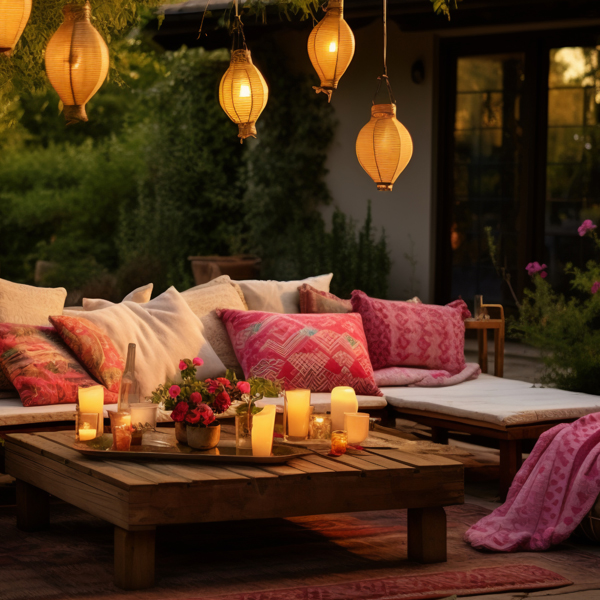
A typical 50 to 60 square metre patio scheme might combine perimeter wall lights for ambient fill, recessed deck lights for task illumination near seating, and one or two uplights highlighting specimen trees or architectural features.
Where to Place Garden Lights by Area

Paths and Walkways
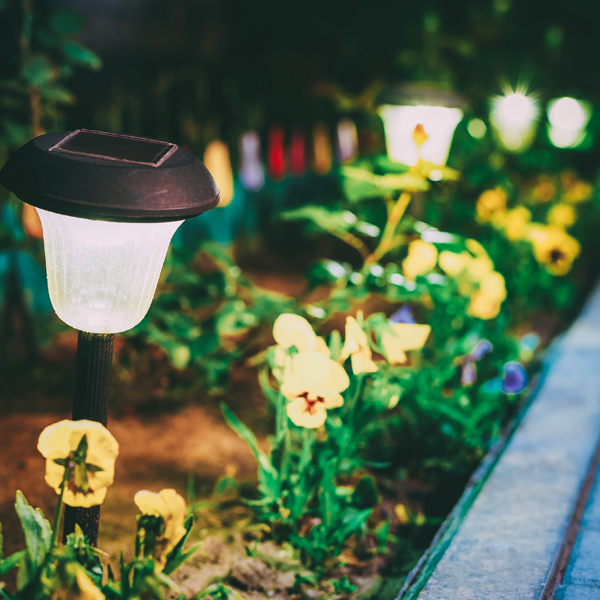
For paths and walkways, use low bollards, path spikes, or recessed channel lights. Space them according to beam spread and height, typically 1.8 to 3 metres apart. Light narrow paths from one side, wider routes from staggered sides, aiming downward to limit glare and spill.
Steps and Level Changes
Illuminate each step individually to prevent falls. Use riser lights, recessed step lights, or soffit downlights to create clear tread contrast. Position fixtures to light the tread, not eyes, avoiding shadows at edges. Select IP65-rated fittings and ensure anti-slip surfaces stay visible in all conditions.
Patios and Seating Areas
Combine soft perimeter ambient lighting with targeted task lights for dining or reading to create comfortable patios and seating areas. Use dimmable, low-glare fittings and avoid uplights shining into faces. Choose warm 2700–3000 K tones and shield fixtures to hide light sources from seated positions.
Entrances and Doorways
Even downward lighting at doorways mounted around 1.5 to 1.8 metres provides facial recognition for security while avoiding harsh shadows. Balance safety with privacy using motion control that activates on approach rather than continuous operation.
Shielded sconces or canopy lights prevent light from intruding into windows, and positioning fixtures to illuminate the door frame rather than the wall reduces wasted light.
Driveways and Parking Areas
Edge lighting using low profile fittings keeps visibility for drivers without flooding neighbouring properties. Directional low angle fittings and motion or timer controls reduce run hours while maintaining security.
Avoid high mounting positions that create glare in windscreens, and keep light levels appropriate to the task rather than overlighting for perceived safety.
Garden Boundaries and Fences
Subtle low level grazing adds depth without creating harsh boundaries. Shielded fittings prevent light trespass across property lines, and positioning fixtures to graze surfaces at acute angles reveals texture while minimising spill beyond the fence line.
Highlighting Garden Features Effectively
Trees, Shrubs and Planting
Uplighting requires placing fixtures at roughly one to two times the trunk diameter from the trunk to avoid silhouetting.
Low power narrow beams and warm temperatures protect wildlife, and keeping light off canopy interiors reduces attraction for insects. Downlighting from branches works for mature trees but requires secure mounting and IP rated fittings for long term reliability.
Water Features and Sculptures
Minimal well shielded lighting highlights reflections without overpowering the feature itself. Fixtures near water must be rated IP65 or higher, and circuits require RCD protection wiring regulations to prevent electric shock risks in damp environments.
How Far Apart Should Garden Lights Be
Spacing depends on beam angle, mounting height, and purpose rather than a single fixed number. Different fixture types and installation contexts create different spacing requirements.
Beam Angle and Mounting Height
Beam angle and mounting height determine coverage area. Narrow beams cover longer distances when aimed accurately, while wide beams require closer spacing to maintain even illumination.
| Fixture Type | Mounting Height | Typical Spacing | Beam Consideration |
|---|---|---|---|
| Low path lights | 0.3 to 0.6 m | 1.8 to 3 m apart | Wide beam reduces spacing needs |
| Bollards | 0.6 to 1.0 m | 2 to 4 m apart | Medium beam for even path coverage |
| Accent spots | Variable | Overlap for depth | Narrow beam creates focused highlights |
| Step lights | Recessed or riser-mounted | One per step | Direct illumination of tread required |
These figures provide starting points, though exterior lighting design guidance offers numeric validation for designers requiring calculated illuminance levels and uniformity ratios.
Even Spacing vs Purposeful Spacing
Even spacing suits paths and drives where consistent visibility matters. Staggered or clustered spacing works better for feature emphasis, creating focal points and visual rhythm.
Uneven spacing prevents monotonous runway effects and allows intentional dark zones between lit areas where the atmosphere benefits from contrast.
Safe Placement and Light Pollution Control
Power routing, depth, drainage, access guide placement aesthetics, ensuring safety responsibility. For fixed mains installations, electrical safety regulations require proper earthing, protective devices, and appropriate cable management for outdoor circuits.
Select suitable fittings and specifications, including IP rating for outdoor lights, for appropriate protection levels for UK weather exposure.
Warm colour temperatures at or below 3000 K combined with shielding reduce ecological impacts on insects and bats, both documented concerns in peer reviewed research showing that even low levels around 5 lux can alter insect behaviour outdoors.
Low Voltage vs Mains Voltage Systems
Professional UK installations favour 12V or 24V low-voltage systems for garden lighting.
There are good reasons for this preference, though mains voltage still has its place for specific applications.
- Low-voltage systems running at 12V or 24V are safer for outdoor use because there is reduced risk of electric shock in wet conditions. They are more flexible for layout changes or future expansion without needing to rewire half the garden. Easier to adjust after planting matures or your garden layout evolves, which happens more often than people expect when planning installations.
- Transformers typically support 8–12 fixtures per circuit, depending on total wattage. LED low-voltage systems convert approximately 70% of energy to light, making them highly efficient for long-term running costs.
- Mains voltage systems running at 230V are required for higher-output security floodlights above 1,000 lumens. Qualified electricians must install them in full compliance with UK’s electrical installation standard. Less flexibility for post-installation adjustments exists with mains systems. Higher installation costs apply because of buried armoured cable requirements.
Common Garden Lighting Placement Mistakes
Common placement mistakes that create safety or compliance issues (that add cost and frustration later) include:
- Over-lighting small zones wastes energy and creates glare, making spaces uncomfortable rather than inviting while driving up electricity costs unnecessarily.
- Placing fixtures at eye level causes direct glare, reducing visibility and comfort for anyone using the space regularly.
- Pointing accent lights across seating areas blinds occupants rather than highlighting features, defeating the purpose of accent lighting entirely.
- Ignoring neighbour sightlines and ecological sensitivity leads to complaints, planning objections, and potential legal issues around light nuisance.
To prevent these problems, keep run hours short using motion activation combined with low-level background lighting, and avoid continuous bright floodlighting that increases sky glow and ecological disruption
When Do You Need a Professional Design
DIY suits small gardens using solar or movable spike lights on simple path or patio layouts without mains wiring. Professional design helps with complex or large gardens needing calculated spacing, buried cables, or sensitive feature lighting.
If you’re unsure whether your layout requires technical planning or compliance checks, we recommend speaking with our garden lighting specialists, who can assess spacing, shielding, and electrical safety before installation begins.
Poor placement increases costs later, as rewiring, trenching, glare fixes, or incorrect spacing often require replacing or moving fixtures.
| Scenario | DIY Suitable | Professional Recommended | Key Consideration |
|---|---|---|---|
| Small courtyard with solar path lights | Yes | Optional | Simple layout, no wiring |
| Large garden with mains installation | No | Yes | Cable routes, RCD protection, design calculations |
| Feature tree lighting near bat habitat | No | Yes | Ecological assessment, shielded directional fittings |
| Driveway lighting near neighbour windows | Marginal | Yes | Obtrusive light compliance, positioning accuracy |
According to UK energy consumption data, domestic energy efficiency improvements continue reducing household consumption, making low energy LED fittings with controls the standard approach for new installations.
Professional designers specify appropriate lumen outputs and control strategies that balance safety, atmosphere, and running costs.
Conclusion
Good placement improves safety, atmosphere, and cost effectiveness. Plan layered lighting, prioritise shielding, proper spacing, and warm colour temperatures, and use controls to cut run hours.
Professional advice avoids costly mistakes. If you would like help planning or installing your garden lighting,get a free estimate, and we will assess placement, safety, and wildlife impact to produce a clear installation plan.
FAQs
How many garden lights do I need?
The number of lights you need depends on garden size, layout complexity, and usage zones rather than area alone. A typical 60 square metre garden might use 8 to 15 fixtures covering paths, seating, and features.
Can I move lights later
Solar and spike lights move easily. Mains installations require rewiring and ground disturbance, making initial placement critical to avoid expensive repositioning later.
Is solar lighting suitable for all areas?
Solar suits low security paths and features in sunny unobstructed spots. For steps, driveways, or dense canopy areas, mains or battery backed fittings prove more reliable.
Do I need permission to install garden lights?
Domestic garden lights rarely need planning permission, but sensitive areas, heritage sites, or lighting near protected habitats may require assessment. Follow BS 7671 for mains work.
What colour temperature should I use outside?
Warm light at or below 3000 K reduces blue light content and limits ecological impacts while maintaining a welcoming atmosphere for human use.

